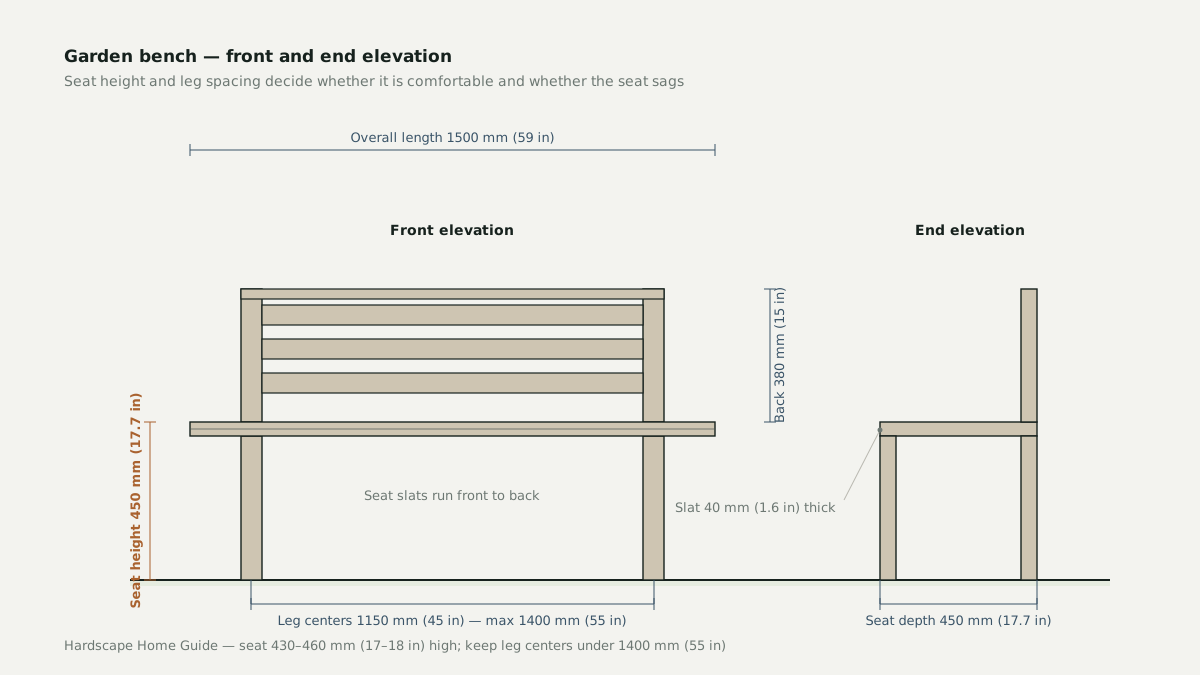
Garden benches fail at the joints and the feet, not the seat. The joinery and whatever the legs stand on decide whether the bench is solid in fifteen years or rocking in three.
Dimensions that decide whether it gets used

Seat height is the critical dimension. Below 430 mm (17 in) most adults push up from the arm rather than the legs; above 460 mm (18 in) shorter users dangle. Seat depth past 460 mm (18 in) without a back makes a perch.
| Dimension | Comfortable range | Why it matters |
|---|---|---|
| Seat height | 430–460 mm (17–18 in) | The stand-up dimension |
| Seat depth | 380–460 mm (15–18 in) | Over 460 mm (18 in) needs a back |
| Back height above seat | 300–400 mm (12–16 in) | Under 300 mm (12 in) supports nothing |
| Arm height above seat | 200–250 mm (8–10 in) | Loads the arm, not the knees |
| Overall length | 1200–1800 mm (4–6 ft) | 1500 mm (5 ft) seats two properly |
| Leg spacing, center to center | ≤ 1400 mm (55 in) | Beyond this the slats deflect |
Measured to the top of the seat, on a level surface, bench empty.
The material field, and how each one weathers
Durability is graded on measured performance. Australia and New Zealand use AS 5604, Class 1 (most durable) to Class 4; North America rates treated timber by AWPA Use Category — UC4A for ground contact, UC4B for heavy-duty contact. Ask which class a bench is built from, and ask to see the ticket.
| Material | Durability | Outdoor life | Annual care | Cost |
|---|---|---|---|---|
| Old-growth teak | AS 5604 Class 1 | 25–40 yrs | None, or oil for color | $700–$2,000 |
| Plantation teak | Class 2–3 | 12–20 yrs | Oil to slow checking | $350–$900 |
| Iroko | Class 1–2 | 20–35 yrs | None | $400–$1,200 |
| Black locust (robinia) | Class 1–2 | 20–30 yrs | None | $350–$1,000 |
| Jarrah / spotted gum | Class 1 | 25–40 yrs | None; re-sand at 10 yrs | A$600–$1,800 |
| Eucalyptus / acacia | Class 2–3 | 8–15 yrs | Oil, or accept checking | $150–$500 |
| Western red cedar | Class 2–3 | 10–18 yrs, above ground | Stain every 2 yrs | $200–$600 |
| Larch | Class 3–4 | 8–15 yrs | Oil every 2 yrs | $180–$500 |
| Pressure-treated pine | UC4A | 10–20 yrs | Stain every 2–3 yrs | $120–$400 |
| Cast aluminum | — | 20–30 yrs | Wash; touch up chips | $250–$900 |
| Wrought iron | — | 30–50 yrs if painted | Repaint every 2–3 yrs | $400–$1,500 |
| Recycled HDPE plastic | — | 25–35 yrs | Wash | $300–$900 |
| Wood-plastic composite | — | 15–25 yrs | Wash | $350–$1,200 |
Costs are retail, regional and dated to 2026. Lifespans assume the feet sit clear of soil on a drained surface — in wet soil the bottom figure halves.
Teak, and the plantation question
Teak earns its reputation on extractive content genuinely toxic to decay fungi, and on stability most dense hardwoods lack. But “teak” covers two products. Old-growth, slow-grown and tight-grained, is Class 1. Plantation teak cut at 15–25 years carries a wide band of pale sapwood, lower extractives, and commonly tests into Class 2 or 3 — a good bench, but not a 40-year bench.
The budget hardwoods
Iroko and black locust are the honest value picks — dense, Class 1–2, often a third the price of teak. Iroko moves noticeably in service; black locust barely does. Jarrah and spotted gum are the Australian answer, Class 1 in ground contact under AS 5604. Eucalyptus and acacia sit below them: Class 2–3, and fastest to gray if left unfinished.
Softwoods, metal, plastic and composite
Western red cedar is Class 2–3 and fine above ground, but soft and dent-prone; never a ground-contact foot. Larch is similar but less durable. Pressure-treated pine is good if rated for the exposure — a UC3B piece is above-ground only, and its feet rot from the bottom in three to five years regardless of treatment.
Powder-coated cast aluminum is the lowest-maintenance frame, but bare metal is uncomfortable in heat and cold, which is why aluminum and iron benches pair with timber slats. Wrought iron lasts 30 to 50 years with a repaint every two to three years and stainless fixings; zinc-plated bolts vanish within a season. Recycled HDPE needs nothing but expands and sags in hot sun; composite sits between plastic and timber.
Joinery: mortise and tenon versus screws in end grain
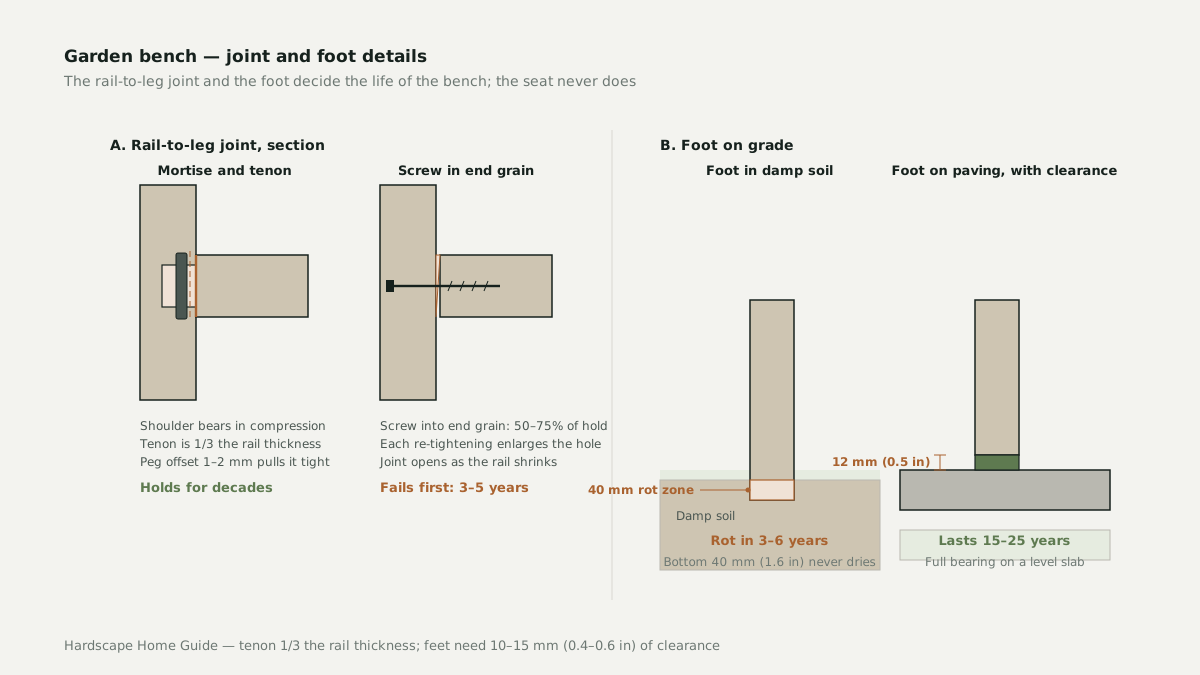
A proper mortise-and-tenon joint has three features. The tenon is cut to roughly one third the thickness of the rail, so the cheeks compress and release without splitting the leg. It has a shoulder — a square face bearing on the leg — taking load in compression rather than leaving it to the fastener. And it is often draw-bored: a peg hole offset 1–2 mm (0.04–0.08 in) from the hole in the tenon, so the peg pulls the joint tight as the timber seasons.
The alternative, and the one that fails first, is a screw driven into end grain. End grain is a bundle of open tubes; a screw engaging it has roughly half to three quarters the withdrawal strength of the same screw driven across the grain, and each re-tightening enlarges the hole. Leg and rail also move in different directions seasonally, so the wood itself works the screw loose every year.
What the bench stands on
Feet in damp soil rot from the bottom up, and this is the most common single cause of a failed timber bench. The bottom 40 mm (1.6 in) of a leg sits in permanent contact with moisture and soil-borne fungi. No finish survives it, and no species is immune.
| What the feet sit on | Effect on foot life | What to do |
|---|---|---|
| Bare soil or mulch | Rot in 3–6 years | Lift the bench onto a pad |
| Compacted gravel | 8–15 years if drained | 50 mm (2 in) of compacted 20 mm stone |
| Pavers or slabs | 15–25 years | Full bearing, 10–15 mm (0.4–0.6 in) clearance |
| Concrete pad | 20–40 years | 75 mm (3 in) pad, sloped 2% away |
| Feet standing in water | Rot in 2–4 years | Fix the drainage; the bench is the symptom |
A bench on a concrete pad is the durable answer, and a small pad is a cheap one. If you are already pouring flatwork, see concrete patio for base build-up and joint spacing.
Nylon or stainless glides raise the timber 10–15 mm (0.4–0.6 in) so end grain dries after rain. On gravel, set feet on precast pavers rather than burying them; on a slope, cut the legs rather than shimming the high side.
Siting: sun, wind and the case for moving it
Sun exposure. Ultraviolet light breaks down lignin at the timber surface, which is what turns it silver-gray — cosmetic. The heat cycling is not. In full afternoon sun in Arizona, inland Queensland or Central Otago, surface temperatures on a dark-painted bench exceed 60 °C (140 °F), and repeated wet–dry cycling opens checks along the grain far faster than in shade.
Prevailing wind. Face the bench away from the weather. Rain driven into the back rest and rail joints is what starts decay there, and a bench facing the wind is the bench nobody sits on.
Water. Keep benches clear of sprinkler overspray. A bench watered twice a week never dries at the joints.
Moving the bench seasonally is worth the ten minutes. In Canada and the northern US, bringing a timber bench into a garage for the freeze–thaw months removes the wetting cycle that drives freeze damage in end grain; in Australia and New Zealand the same logic applies to the wet season. If you cannot move it, a breathable cover that ties down is next best — never a tarp sealed tight.
Finishes and the annual oiling question
Leaving timber to weather is a legitimate choice, not neglect: untreated teak, iroko and black locust go silver-gray within 12 to 18 months and that layer is stable.
Oiling is a commitment, not a one-off. If you oil teak once and stop, the surface weathers unevenly: it grays in patches, holds dust, and grows mildew on residual oil. To hold the color you oil annually, sanding lightly first — which removes roughly 0.5–1 mm (0.02–0.04 in) of surface each time.
Penetrating oils — tung, linseed-based deck oils, UV-filtering teak oils — move with the timber and let it breathe. Film finishes — varnish, polyurethane, lacquer — do not. They crack within two or three seasons, and once cracked they trap water and cause the decay they were meant to prevent.
Decay looks nothing like weathering. It is dark, blotchy and soft, concentrated at joints and feet, and a screwdriver sinks into it easily. A leg soft at the base needs a new leg, not more oil.
Repair: slats, joints and surface mold
- A failed slat. Most seat slats are 40 × 90 mm or 45 × 95 mm (1.6 × 3.5 in or 1.8 × 3.7 in). Replace in the same species, predrilled, with 316 stainless — and drill a fresh pilot rather than reusing a hole enlarged by an end-grain fixing.
- A loose joint. Do not crank the bolt tighter; you will crush the timber and enlarge the hole. Dismantle, check whether the mortise has worn, and re-fix through a fresh line, or glue and peg the tenon. Use polyurethane or resorcinol outdoors — PVA is not waterproof.
- Surface mold. Green or black film is mold and algae, not decay. Clean with a sodium percarbonate or oxalic acid deck brightener, scrub along the grain, rinse. Avoid chlorine bleach: it attacks surface lignin and leaves the timber more open to water.
- Early decay. Where timber is soft but the section is sound, a borate treatment slows fungal growth. Where the section has gone, cut it out and scarf in a new piece.
Coastal salt air and high UV: how the ranking changes
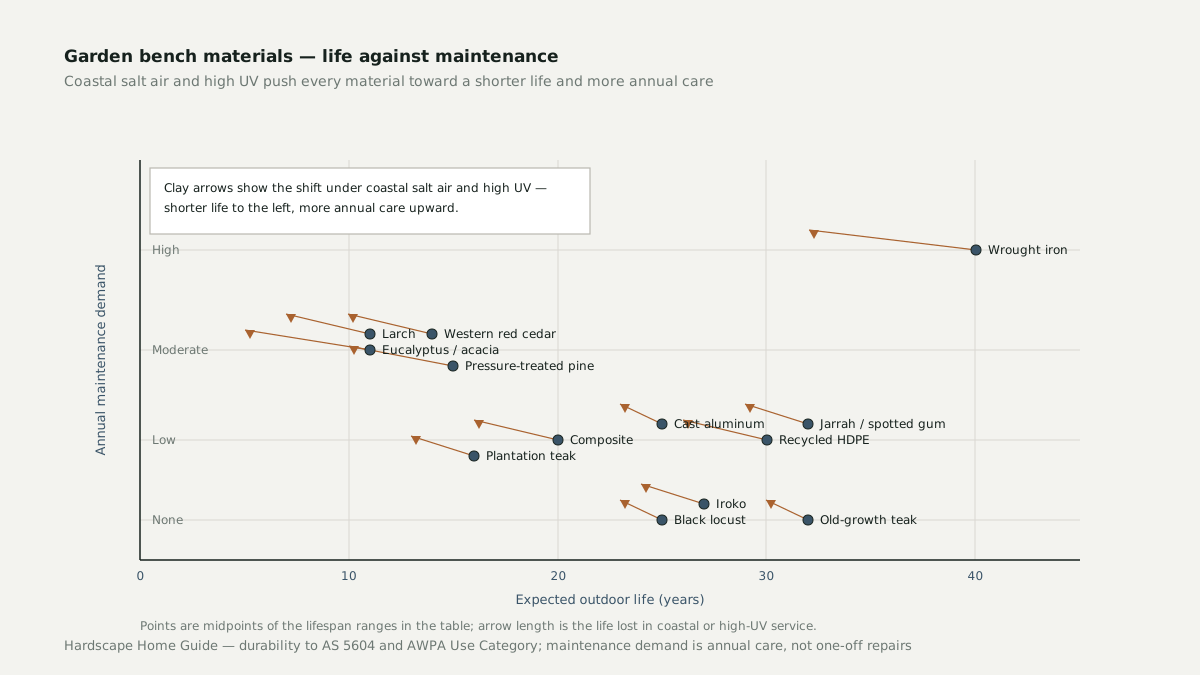
Fasteners move up the priority list. Grade 304 stainless pits and bleeds rust within two to three years within about 1 km of salt water; 316 is the specification, with hot-dip galvanised the fallback inland. Where stainless meets aluminum, isolate the two with nylon washers or the aluminum suffers poultice corrosion — a white crust that becomes a hole.
The cheap hardwoods drop further. Eucalyptus and acacia, already Class 2–3, check badly under high UV and split within two summers if left unfinished. In Queensland or Northland they need annual oil, erasing most of their cost advantage over black locust.
Metal improves relative to timber, with one exception. Powder-coated aluminum handles salt air and UV better than any timber and needs almost nothing. Wrought iron does the opposite: in coastal air it rusts from inside every joint, and repainting every two to three years becomes every year.
The gap at the foot matters more, not less. Salt and constant humidity keep the bottom of the leg wet longer, so the 10–15 mm (0.4–0.6 in) clearance is not optional. A bench on a slab will outperform one on soil by a decade.
For a public or commercial space, the specification changes again — vandal-resistant fixing and the applicable standards are covered in the park bench specification guide. The patio sets guide covers how seating zones and circulation fit together, and outdoor sectionals covers the upholstered end of the same decision.
Frequently asked questions
Which wood is best for a garden bench?
Old-growth teak, iroko and black locust are the most durable, rated AS 5604 Class 1 or 1–2 and good for 20 to 40 years with no finish. Plantation teak cut at 15–25 years commonly tests into Class 2 or 3, so it is a 12–20 year bench. Pressure-treated pine rated UC4A is the budget option at 10–20 years, and only if it is genuinely rated for ground contact.
Should I oil a teak garden bench?
Only if you will keep doing it. Left alone, teak goes silver-gray in 12 to 18 months and that surface is stable and harmless. If you oil once and stop, it grays in patches, holds dust and grows mold on the residual oil. Holding the color means oiling annually and sanding lightly first, removing roughly 0.5–1 mm (0.02–0.04 in) of surface each time.
How do I stop a wooden garden bench rotting at the feet?
Get the feet out of soil. The bottom 40 mm (1.6 in) of a leg in damp soil rots in 3 to 6 years whatever the species. Stand the bench on a 75 mm (3 in) concrete pad, or on pavers with nylon glides giving 10–15 mm (0.4–0.6 in) of clearance so the end grain dries after rain, and slope the pad 2% away from the bench.
Do garden bench fixings need to be stainless?
Yes, and 316 rather than 304 within about 1 km of salt water, because 304 pits and bleeds rust within two to three years in coastal air. Zinc-plated bolts disappear within a season in a damp climate and the bench then loosens at every joint. Where stainless meets aluminum, isolate the two with nylon washers or the aluminum suffers poultice corrosion.
Sources and references
- USDA Forest Service, Forest Products Laboratory — Wood Handbook: wood as an engineering material
- American Wood Protection Association — Use Category system for treated wood
- Standards Australia — AS 5604, timber natural durability ratings
- BRANZ — timber durability and exterior use in New Zealand
- Forest Stewardship Council — certified timber sourcing
