An outdoor sectional is a layout decision before it is a furniture purchase. A sofa set can be turned or rearranged next season; an L commits you to one orientation and one circulation path. Get that right and almost any decent frame will last a decade. Get it wrong and the best frame in the catalogue sits empty.
The run comes before the frame
Measure the patio edge you intend to fill, subtract the clearance at each end, and the number left is the run you can buy. Every modular system is built from the same handful of widths, because the dimensions follow bodies rather than fashion.
| Module | Width | Depth |
|---|---|---|
| Single seat | 24–30 in (61–76 cm) | 33 in (84 cm) |
| Two-seat | 52–60 in (132–152 cm) | 33 in (84 cm) |
| Corner | 36 in (91 cm) | 36 in (91 cm) |
| Chaise | 36 in (91 cm) | 60–80 in (152–203 cm) |
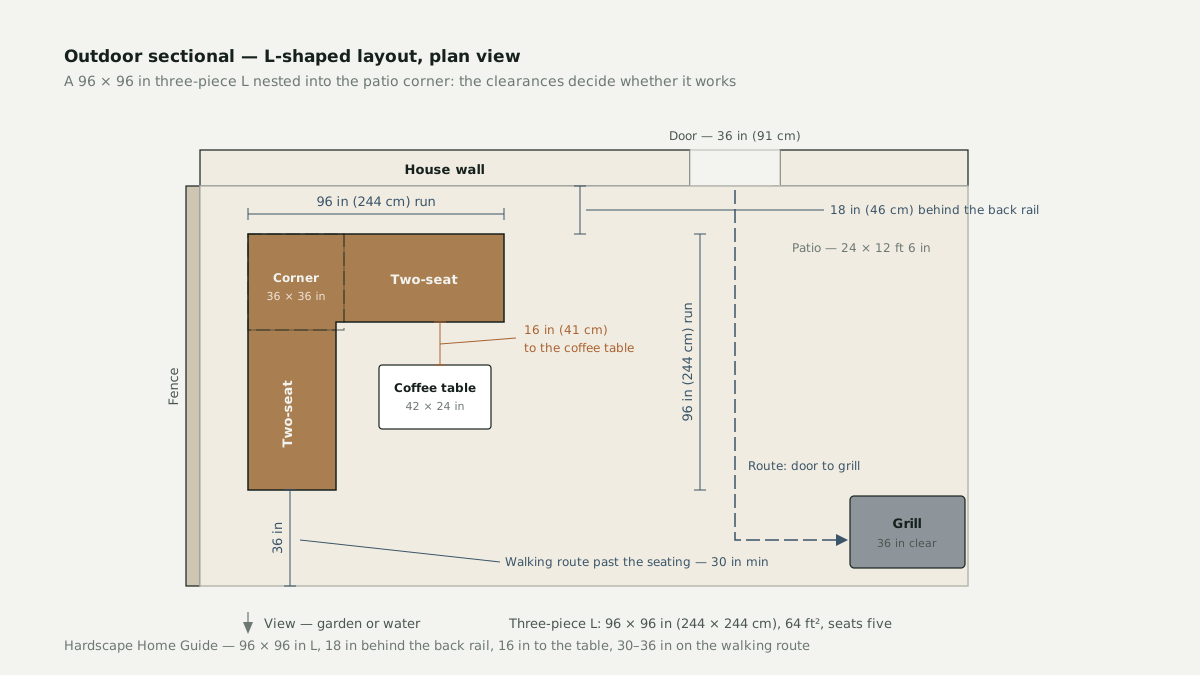
A corner module adds 36 in (91 cm) to both legs. Depths assume a 25 in (64 cm) cushion plus an 8 in (20 cm) back rail, so a deep-lounge frame is 41–43 in (104–109 cm) deep.
A three-piece L — one corner module and two two-seat modules — occupies 96 × 96 in (244 × 244 cm), 64 ft² (5.9 m²), and seats five. The loose-seating equivalent, an 84 in (213 cm) sofa with two lounge chairs and a side table, needs 148 × 96 in (376 × 244 cm), 99 ft² (9.2 m²). The sectional does the same job in about two-thirds of the floor area. The catch is the shape: a sectional is one solid rectangle with a notch cut out, while loose seating is a set of rectangles you can slide apart. On a wide, shallow patio the sectional can be the worst answer, because an L cannot be broken apart without leaving a gap in the middle.
Orientation: which way the room faces
With the run settled, the only question left is which corner of the patio the L occupies. Four constraints set the answer and they rarely agree, so rank them before you shop: view, then the route from the door, then sun, then wind.
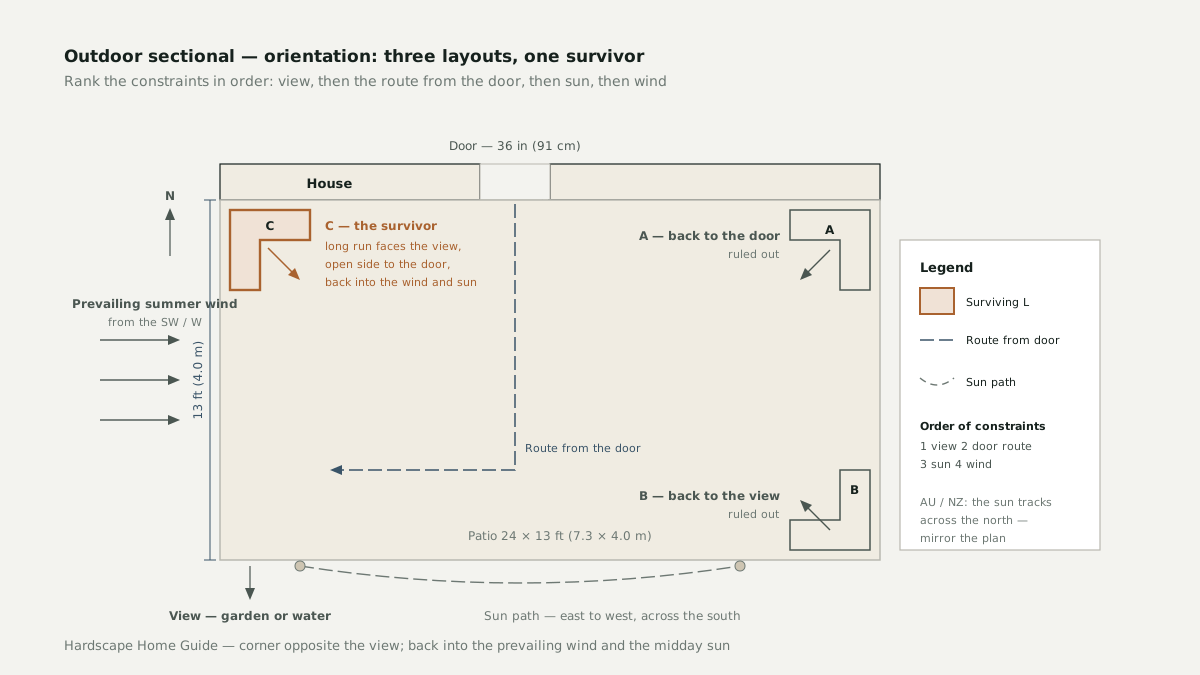
Put the corner opposite the view you paid for, so the long run faces the water or the garden rather than the back of the house. Then check the door: the open side of the L should be the side people arrive from, because an L that presents a back rail to the door makes every guest walk its full length to find a seat. Then the sun. In the US and Canada the sun tracks across the south, in Australia and New Zealand across the north. The long back of the L is a shade wall. On the equator-facing side the seats sit in shade at midday; rotate the L ninety degrees and you trade that for a sun-striped seat.
Wind decides between otherwise equal layouts. The back is a windbreak, and a back cushion absorbs a surprising amount of a 15 mph (24 km/h) breeze, so face the seats away from the prevailing summer wind: southwest in much of the US, the northeast sea breeze on the Australian east coast, the westerly in New Zealand. The grill belongs on the circulation route, never inside the seating pocket — keep 36 in (91 cm) clear in front of it and keep it downwind.
Clearances that keep an L usable
A sectional has four edges and only one is a wall. The other three need numbers before you buy, because the failure is always the same: the frame fits the patio and the people do not fit the frame.

| Where | Minimum | Comfortable |
|---|---|---|
| Behind the back rail | 18 in (46 cm) | 24 in (61 cm) |
| Seat front to coffee table | 14 in (36 cm) | 16–18 in (41–46 cm) |
| Chaise front to table | — | table beside, not in front |
| Walking route past seating | 30 in (76 cm) | 36 in (91 cm) |
| Grill clearance | 36 in (91 cm) | 42 in (107 cm) |
30 in is one person walking; 36 in is two passing. Measure the route people actually take from the door to the grill.
The gap behind the back rail is not decoration. Back cushions need air moving past them, and 18 in (46 cm) is the least that lets you reach in with a brush and lets the frame dry. Push the L against a fence and the back cushions stay damp at the bottom edge through every wet spell — where the first mildew appears.
The chaise is the module people get wrong against a coffee table. A chaise is a footrest, so the table cannot go in front of it: you cannot put a drink where your feet already are. Put the table in front of the seated modules and let the chaise run out past the end of it, keeping 16 in (41 cm) between the seat fronts and the table edge. If there is nowhere else for the table, use a 12 in (30 cm) deep console; a 30 in (76 cm) one is not reachable from a seated position.
L, U, or a straight run with an ottoman
An L is two runs meeting at a corner with two sides left open, and it is the only shape that works on a patio under 14 ft (4.3 m) wide. A U encloses three sides: excellent for conversation in a large yard, a trap on a small patio because it seals off the circulation route.
A straight run plus one ottoman gets overlooked. Two or three seats in a line with a 30 × 30 in (76 × 76 cm) ottoman that slides in front of whichever seat you want gives you the chaise function without committing a permanent 80 in (203 cm) leg to the layout. It suits a long, narrow patio, or one that has to stay clear for a party. The ottoman has to be moved, though, and it will drift.
Modular or fixed
Modular frames clip or bolt together; fixed frames are welded as one piece. Modular costs 10–20% more for the same materials, so the question is not which is better but whether you will reconfigure it. For most buyers the answer is once, in the first month, and never again.
Buy modular for the other reasons. A module passes through a side gate that a fixed 96 in (244 cm) frame cannot, one damaged module can be replaced rather than the whole set, and modules stack flat for winter. If none of those apply, a fixed frame is stiffer, cheaper and has no hardware to loosen. Check the connectors: metal, not plastic, bolted through a plate rather than clipped into an extrusion slot.
Cushions are where the money goes
Replacement cushions run 30–40% of the original set price — $500–$1,400 (A$750–A$2,100) for a five-seat L — which makes the cushion a maintenance item on a schedule, not a detail.
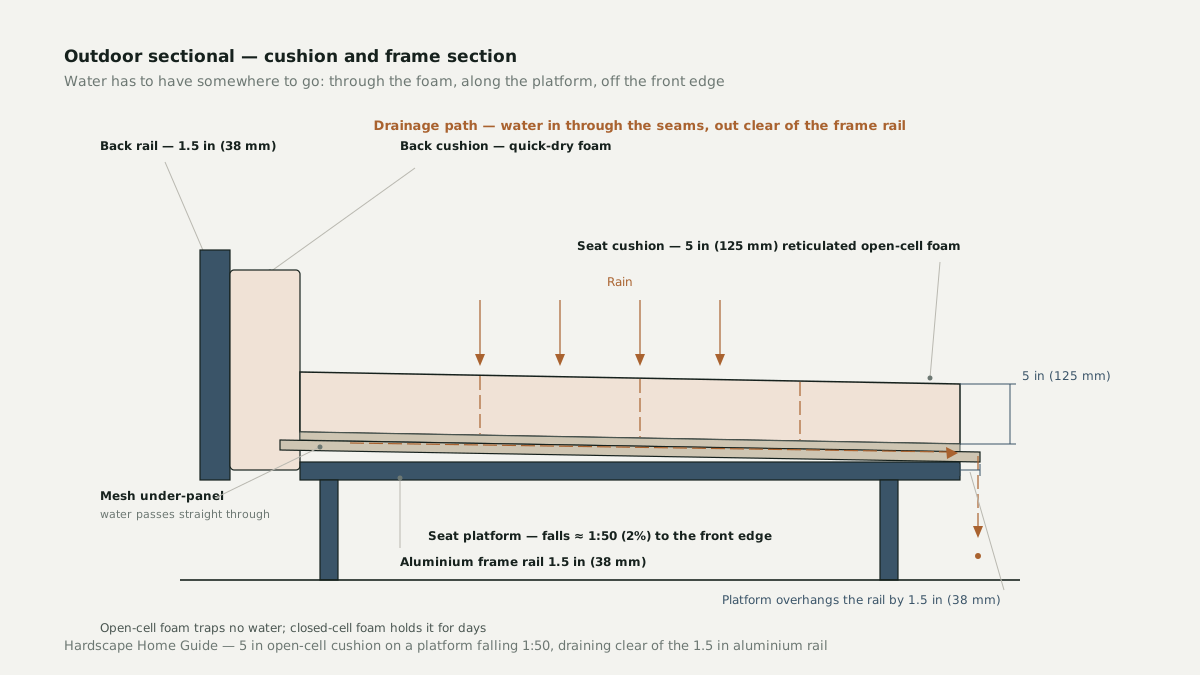
The failure we see most is not UV fade and it is not the frame. It is a cushion that holds water. Water gets in through the seams, sits in the foam and stays there for days after the surface has dried, which is exactly the condition mildew needs. Two things decide whether that happens: the foam’s cell structure, and the path the water has out.
Standard polyurethane foam is closed-cell or partly closed-cell: cheap and firm, and it absorbs water like a sponge because the cell walls trap it. Quick-dry foam is open-cell and reticulated — the cell walls are removed so the structure is a continuous web with nothing to hold water. Reticulated foam is less supportive at the same thickness, which is why good quick-dry cushions are thicker (4–6 in / 100–150 mm rather than 3 in / 75 mm) and cost more.
| Fill and cover | Rain | UV fade | Life |
|---|---|---|---|
| Quick-dry foam / solution-dyed acrylic | Drains fast | 1,000–1,500 h | 6–10 years |
| Quick-dry foam / olefin | Drains fast | 500–800 h | 4–7 years |
| Polyurethane foam / polyester | Holds water | 200–400 h | 1–3 years |
| Any fill / PVC-backed cover | Sealed, so it pools | Varies | Not for uncovered use |
Hours are accelerated-weathering equivalents under ASTM G154 and AATCC 16. High-UV Australia and New Zealand run harder than the lab, which is why fabric warranties stop at 3–5 years.
Solution-dyed acrylic is pigmented in the fiber rather than dyed after weaving, so the color cannot be abraded off the surface. Olefin is cheaper but fades faster, and polyester over standard foam is what produces the mildew complaint.
The frame side of the drainage path is the part buyers never check. A cushion sits on a platform; if that platform is a solid sheet, water that drains through the cushion has nowhere to go and the cushion sits in a puddle. Look for a sloped or perforated platform, or a mesh panel, with a clear gap to the frame rail below.
Frames: aluminium, teak, PE rattan, steel
Powder-coated aluminium is the default: it does not rust, it is light enough to move alone, and it handles salt air. The coating is where the money is — a reputable powder coat on aluminium should meet AAMA 2604, or AAMA 2605 for coastal work. Look for welded load-bearing corners, and 316 stainless fasteners near salt water.
Teak is the timber that earns its price: naturally durable, dimensionally stable and refinishable indefinitely. Expect a grey patina within a season unless it is oiled, and annual re-oiling to hold the honey color. Cheaper species work only if they are genuinely durable, so check the natural durability rating rather than the marketing name; a non-durable species must be preservative-treated.
PE rattan — synthetic wicker woven over an aluminium frame — performs well when the weave is tight and the subframe really is aluminium. The common failure is a steel subframe rusting from the inside and staining the weave — ask what the frame is, not what the weave looks like. Natural rattan and cane belong under cover.
Steel is the frame to be careful with. Powder-coated steel is stiff and cheap, and it rusts from a chip or a scratch at a weld, usually within two years. It needs galvanizing before coating, and even then it is a poor choice within a mile of the coast.
Covers, storage and high-UV fabric
A cover is not a substitute for storage, and a badly chosen one is worse than nothing: a cover that traps water against the frame creates the damp, dark condition that grows mildew. Use a breathable, water-repellent fabric with a vent, pitched so water runs off rather than pooling on the seat. In Canada and the northern US, take the cushions indoors regardless — freeze–thaw cycling breaks down foam, and covers do not survive being frozen wet.
In Australia and New Zealand UV is the limiting factor, not frost. The sun angle is higher and the atmospheric path shorter, so a fabric that fades at 800 hours in a North American garden can fail in two summers in Queensland or the Waikato. Buy solution-dyed acrylic with a stated lightfastness figure, and rotate seat cushions front to back every few months so wear and fade spread evenly.
None of this rescues a sectional in the wrong orientation. If the L faces away from the view or blocks the route from the door, the cushions and the frame will both be excellent and nobody will sit there. Work the layout first, then buy the frame you can afford inside the shape that works. If the patio surface is still in question, read the guide to concrete patios before you commit to a slab; for the loose-seating alternative, see patio sets. For seating that never needs cushions, the trade-offs are covered in garden benches and, for heavier public-grade frames, park benches.
Frequently asked questions
How much space does an outdoor sectional need?
A three-piece L with a corner module and two two-seat modules occupies 96 × 96 in (244 × 244 cm), about 64 ft² (5.9 m²). Add 18 in (46 cm) behind the back rail for airflow and 30 in (76 cm) minimum on any walking route past the seating.
Should an outdoor sectional face the view or the sun?
Face the view first and rank the other constraints behind it. In the US and Canada the sun tracks across the south and in Australia and New Zealand across the north, so the long back of the L acts as a shade wall on the equator-facing side. Wind comes last: if the wind side and the view side are the same, buy a screen rather than lose the view.
Why does my outdoor sectional cushion stay wet?
Standard polyurethane foam is closed-cell or partly closed-cell and holds water for days, which is what mildew feeds on. Quick-dry foam is open-cell and reticulated so water passes through, but it also needs a sloped or perforated seat platform and a drainage gap to the frame rail below, or the water has nowhere to go.
How long should an outdoor sectional last?
With a powder-coated aluminium frame and cushions kept out of the weather, expect 6–10 years from the cushions and considerably longer from the frame. Replacement cushions typically cost 30–40% of the original set price, so budget for one set over the life of the frame.
Sources and references
- FGIA (formerly AAMA) — voluntary specifications for organic coatings on aluminum, AAMA 2604 and 2605
- ASTM International — flexible cellular foam (D3574) and UV exposure (G154) test methods
- AATCC — test method 16, colorfastness to light
- Standards Australia — AS 5604, timber natural durability ratings
- Sunbrella — solution-dyed acrylic outdoor fabric technical data
