A park bench is specified, not shopped for. It is public infrastructure with a duty cycle, a maintenance budget and an accessibility obligation, and the material and fixing decisions decide whether it serves ten years or thirty.
The seat geometry that actually works
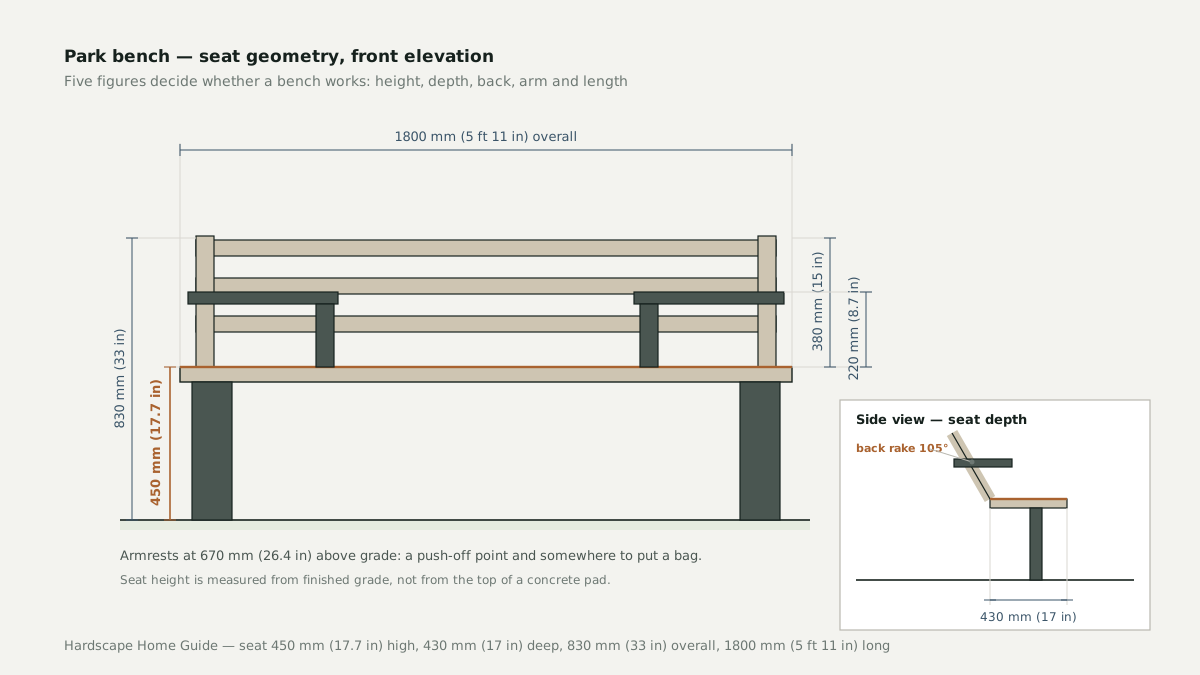
Five numbers carry the design: seat height, seat depth, back height, back rake and armrest height. Land them in the ranges below and the bench works for most adults; miss them and people perch and leave.

| Dimension | Target | Acceptable range | Controls |
|---|---|---|---|
| Seat height | 450 mm (17.7 in) | 430–460 mm (17–18 in) | Standing up |
| Seat depth | 430 mm (17 in) | 380–460 mm (15–18 in) | Back support |
| Back height above seat | 380 mm (15 in) | 300–400 mm (12–16 in) | Lumbar support |
| Overall height | 830 mm (33 in) | 760–860 mm (30–34 in) | Visual weight |
| Armrest height above seat | 220 mm (8.7 in) | 180–250 mm (7–10 in) | Push-off |
| Back rake | 105° from the seat | 100–110° | Whether the back is used |
| Seat length per person | 500 mm (20 in) | 450–600 mm (18–24 in) | How many sit down |
Measured to the top of the seat surface, from finished grade — not from the top of a concrete pad.
Seat depth separates a bench from a perch. At 430 mm (17 in) the backrest lands where the lumbar spine wants it. Past 460 mm (18 in) shorter users cannot reach the back, so they slide forward and load the front edge of the slats — which is where timber wears first. Back rake matters as much: a vertical back reads as a pew, where 105° lets the lumbar slat take load.
Armrests do two jobs
An armrest at 220 mm (8.7 in) above the seat, 670 mm (26.4 in) above grade, gives a hand something to push against — the difference between standing unaided and needing help, particularly with reduced hip or knee strength or in a thick coat. The same armrest splits the bench into individual seats, which is why transit platforms specify arms at each end and often a center arm.
No accessibility standard requires them. The ADA provisions for benches do not mention armrests, because accessible seat requirements are about transferring onto the bench, not standing up from it. Specify arms for the push-off, and accept that a determined sleeper will still use a bench with arms.
Materials compared honestly
Timber species
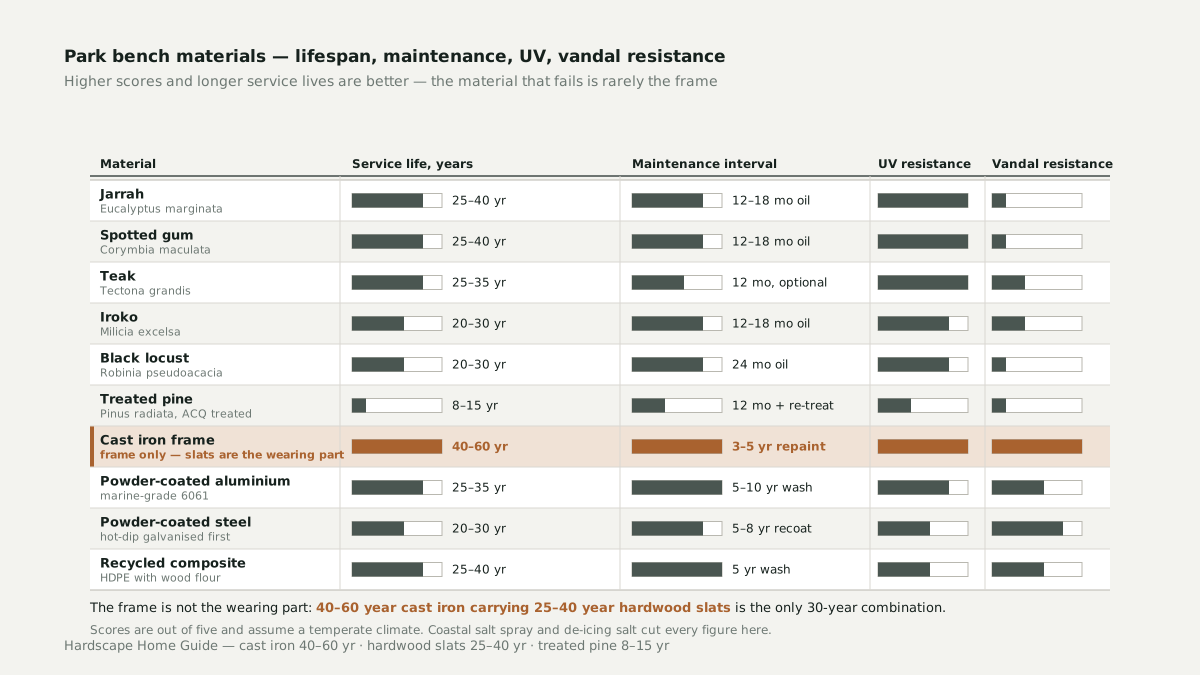
Decay resistance is the biggest predictor of slat life, and it varies more between species than between suppliers. Class 1 species sit outdoors above ground for 20–40 years uncoated; treated pine does not, and no stain changes that.
| Species | Density | Durability class | UV and moisture behavior | Life |
|---|---|---|---|---|
| Jarrah | ≈820 kg/m³ | Class 1 | Silvers evenly, checks lightly, low movement | 25–40 yr |
| Spotted gum | ≈950 kg/m³ | Class 1 | Very stable, greys gracefully, resists surface checking | 25–40 yr |
| Teak | ≈660 kg/m³ | Class 1–2 | Oily, minimal movement, but soft — Janka ≈4.7 kN | 25–35 yr |
| Iroko | ≈660 kg/m³ | Class 1–2 | UV stable, interlocked grain, an irritant to machine | 20–30 yr |
| Black locust | ≈750 kg/m³ | Class 1–2 | Excellent in ground contact, hard, grown in North America | 20–30 yr |
| Treated pine | ≈500 kg/m³ | Class 3–4 | Checks, cups and warps as it dries, greys fast | 8–15 yr |
Durability classes follow AS/NZS 1604 and EN 350. Treated pine must be H3 or better above ground and H4 in ground contact, and cut ends need field re-treatment.
An uncoated hardwood bench is not a neglected one. Jarrah and spotted gum go silver-grey and stay sound — if a screwdriver will not sink into the surface, the timber is fine. Oiling keeps the color and costs labor forever; film finishes trap moisture and peel within two seasons.
Metal frames
Cast iron is still the best frame for a bench that must last 40–60 years: heavy, which is a security feature, and repaintable indefinitely. Powder-coated steel is the commercial default and lives or dies on what is underneath — specify hot-dip galvanising to ASTM A123 or AS/NZS 4680 first, because powder over bare steel fails at the first scratch and rust then lifts the film in sheets. Aluminium (6061 marine grade) cannot rust, which makes it right for coastal salt spray, but it dents and it has scrap value. Use 304 stainless fixings inland, 316 within about 1 km (0.6 mi) of salt water, never zinc-plated.
Recycled plastic and composite
HDPE with wood flour gives 25–40 years with no coating, no rot and no annual labor. It moves more than timber — allow 5–8 mm per meter of slat over a 40 °C (72 °F) swing, so slotted fixings, not drilled holes. It fades flat grey, cannot be sanded back, and melts in fire where hardwood only chars.
Fixings and footings: what the ground decides
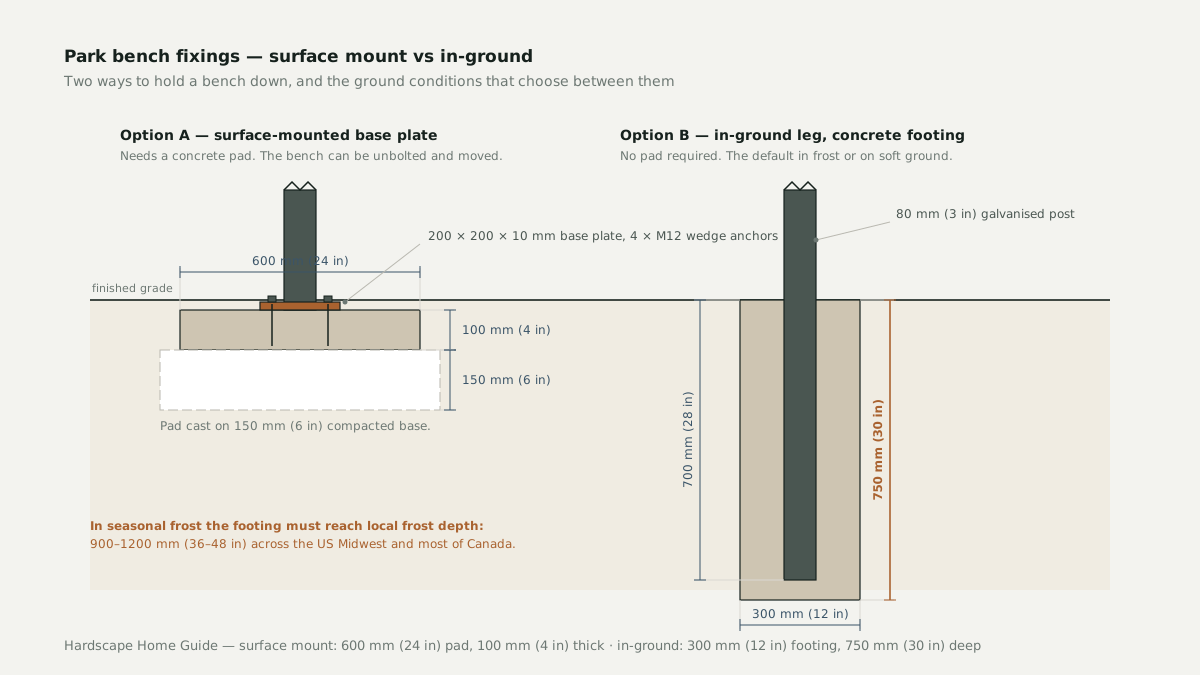
A free-standing bench in a public place will move, tip or disappear. The surface-mounted detail uses a 200 × 200 × 10 mm (8 × 8 × ⅜ in) base plate with four M12 (½ in) stainless wedge anchors at 100 mm (4 in) embedment, into a 600 × 600 mm (24 × 24 in) pad, 100 mm (4 in) thick, on 150 mm (6 in) of compacted base. Use it where paving exists or services run underneath.
The in-ground detail casts a 300 mm (12 in) footing 750 mm (30 in) deep with the post embedded 700 mm (28 in). It is the only detail that resists lifting. Two conditions change the depth. In seasonal frost the footing must reach below local frost depth — 900–1200 mm (36–48 in) across the US Midwest and most of Canada — or it jacks upward each winter. On expansive clay — Texas, inland New South Wales, parts of the Waikato — a straight-sided footing in the active zone moves; bell the base or carry the pier to stable material.
Set the pad top 25 mm (1 in) below finished paving and the footing top flush with grade, so water drains away from the leg.
Vandal resistance and the bolts that survive
Tamper-resistant fixings are a delaying tactic. Pin-in Torx, one-way screws and shear nuts stop the casual removal of a slat or plate; none stops an angle grinder. What protects the asset is weight and geometry: a cast-iron frame at 60–90 kg (130–200 lb) is hard to carry, and concrete-encased legs are effectively permanent. Through-bolts with shear nuts outlast welded slats, because welding turns a $40 repair into a new bench. In graffiti-prone sites, a low-surface-energy clear coat or cast iron that cleans with solvent beats unsealed timber. The honest trade is that the most vandal-resistant bench is the least comfortable and the least liked.
Accessibility across four markets
All four markets converge: a bench is either a place a wheelchair user can transfer onto, or an obstruction to keep out of the route.
| Standard | Market | What it demands of a bench |
|---|---|---|
| 2010 ADA Standards, §903 | United States | Seat 1065 mm (42 in) long minimum, 510–610 mm (20–24 in) deep; seat top 430–485 mm (17–19 in) above grade; back support starting no more than 51 mm (2 in) above the seat and reaching at least 455 mm (18 in) above it; clear floor space 760 × 1220 mm (30 × 48 in) at the end of the seat; 1112 N (250 lb) structural load |
| AS 1428.1 and AS 1428.2 | Australia | Continuous accessible path of travel, 1000 mm (39 in) clear, widened where wheelchairs pass; enhanced provisions under AS 1428.2. A bench beside the route must not narrow it |
| NZS 4121:2001 | New Zealand | Called up by the Building Code for access routes; the bench must not obstruct the route and needs a firm, stable surface at the seat |
| CSA B651 | Canada | The reference standard behind provincial requirements such as Ontario’s AODA; treats seating as part of the accessible route, with clear space and back support |
The conflict worth knowing: ADA §903.3 requires a seat 510–610 mm (20–24 in) deep and back support reaching 455 mm (18 in) above the seat, while the comfort figures are 430 mm (17 in) and 380 mm (15 in). Where transfer matters, the standard wins; clear floor space at the end of the seat is required either way.
That makes the accessible bench and the comfortable bench two products, and a park usually needs both: a 510 mm deep, high-backed bench on the route, and a 430 mm deep hardwood bench where people sit for twenty minutes.
Finishes and re-coating intervals
Cast iron wants a zinc-rich primer and two topcoats, inspected every 3–5 years and touched up within a day of any chip; one left over winter is a 100 mm (4 in) circle of rust by spring. Powder coat over hot-dip galvanising lasts 5–8 years before chalking, failing first at the base plate and the armrest ends. Aluminium needs washing, not coating. Composite needs washing and nothing else, and must never be sanded. Timber is the one optional finish: a class 1 hardwood slat left alone is maintenance-free for its service life and turns grey; oiled every 12–18 months it keeps its color at about 1.5 hours of labor per bench per visit.
Twenty-year cost of ownership
The sticker price is the least useful number in the decision: a bench is a twenty-year budget line, and the labor of maintaining it usually exceeds the difference in purchase price within a decade.
| Build | Capital, installed | 20-year maintenance | 20-year total |
|---|---|---|---|
| Treated pine on galvanised steel | $450–$900 | $1,200–$2,200 | $1,650–$3,100 |
| Spotted gum or jarrah on powder-coated steel | $900–$1,600 | $900–$2,000 | $1,800–$3,600 |
| Aluminium frame, recycled composite slats | $1,400–$2,400 | $200–$500 | $1,600–$2,900 |
| Cast iron frame, class 1 hardwood slats | $1,800–$3,000 | $750–$1,300 | $2,550–$4,300 |
Costs are 2026 US dollars for a single bench, installed, and they are regional: Australia and New Zealand run 10–25% higher on imported cast iron. Maintenance assumes contract labor at $45–$65 per hour.
The arithmetic on 40 benches makes the point. Oiling slats every 18 months at 1.5 hours each is 40 hours a visit — roughly $2,000 a year, more than the difference between a pine bench and a cast-iron one. Treated pine looks cheapest on the purchase order and is usually the most expensive bench in the park by year ten.
Specify the frame for thirty years and the slats for fifteen, and write the slat profile into the schedule so a replacement is a purchase order rather than a redesign. If you are furnishing a garden rather than a park, the geometry is the same but the fixings are not — the garden bench guide covers the domestic options, the patio layout guide and outdoor sectional guide cover how seating sizes into a plan, and concrete patio construction covers the pad itself.
Frequently asked questions
What is the standard height of a park bench?
Seat height is 430–460 mm (17–18 in) above finished grade, measured to the top of the seat surface, and the top of the back sits about 830 mm (33 in) above grade. Seat depth is typically 430 mm (17 in) and the armrest sits about 220 mm (8.7 in) above the seat. Measure from the paving, not from the top of a concrete pad.
How deep should a park bench seat be?
430 mm (17 in) is the target for a general-use bench, with 380–460 mm (15–18 in) the workable range; past 460 mm (18 in) shorter users cannot reach the backrest and slide forward. The ADA is different: a bench on an accessible route must be 510–610 mm (20–24 in) deep so a wheelchair user can transfer onto it. That is why parks often need two different benches.
Should a park bench be bolted to a concrete pad or set in the ground?
Both work when they are detailed properly. A surface-mounted bench needs a 200 × 200 × 10 mm base plate with four M12 stainless wedge anchors at 100 mm (4 in) embedment into a 600 × 600 mm (24 × 24 in) pad, 100 mm (4 in) thick. An in-ground leg needs a 300 mm (12 in) footing 750 mm (30 in) deep, taken below local frost depth — 900–1200 mm (36–48 in) in the US Midwest and most of Canada.
How long does a park bench last?
A cast iron frame lasts 40–60 years, class 1 hardwood slats 25–40 years, and treated pine slats only 8–15 years. The slats are the wearing part, so specify a frame whose slats can be replaced individually in a standard section such as 45 × 90 mm. Left uncoated, a hardwood slat is maintenance-free for its service life and simply turns grey.
Sources and references
- US Access Board — 2010 ADA Standards for Accessible Design, §903 Benches
- Standards Australia — AS 1428 design for access and mobility
- Standards New Zealand — NZS 4121 design for access and mobility
- CSA Group — CSA B651 Accessible design for the built environment
- USDA Forest Service — Wood Handbook: wood as an engineering material
